Kawasaki Ninja evolution: Why mechanical shifts defined era
"If you think the ability of a motorcycle to approach 190 mph or reach the quarter-mile in under 10 seconds is at best frivolous and at worst offensive, this still remains a motorcycle worthy of just consideration."
The history of high-performance motorcycles is defined by the pursuit of speed and the engineering required to tame it. This Kawasaki Ninja evolution explores how manufacturers balanced raw power with aerodynamic necessity to set new production records.
This guide covers speed benchmarks, the impact of industry agreements, and the mechanical shifts that defined a generation.
How did the Kawasaki Ninja ZX-12R impact the speed race?
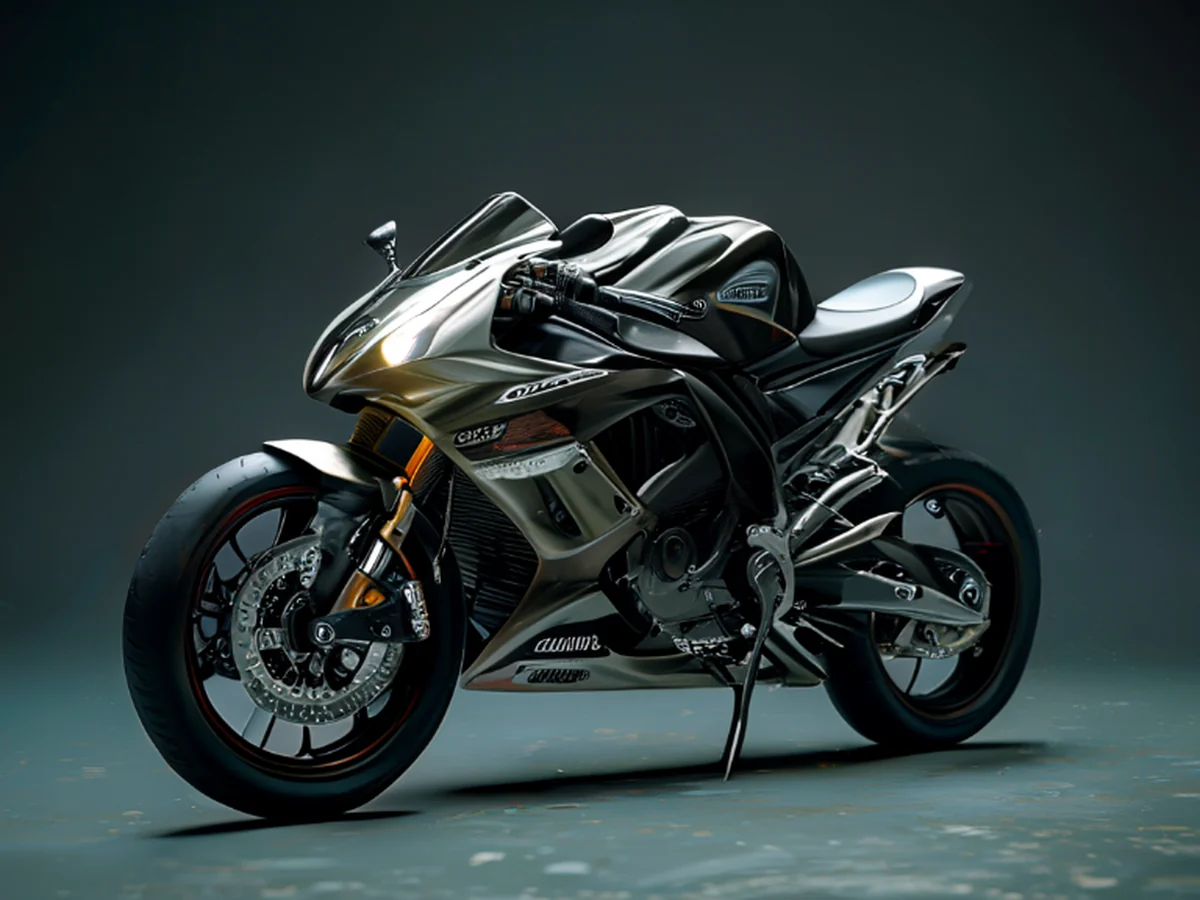
At dusk on the desert track, the rider grips the handlebars of the Kawasaki, feeling the hot wind whip against their face.
A rider grips the handlebars of a late-90s sportbike, feeling the tension of a machine built to challenge the limits of the era. In 2000, the much anticipated Kawasaki Ninja ZX-12R entered the market with high expectations for top-end performance.
The Kawasaki Ninja ZX-12R was designed to push the boundaries of production speed. However, after the much anticipated Kawasaki Ninja ZX-12R of 2000 fell 6 km/h (4 mph) short of claiming the title, the Hayabusa secured its place as the fastest standard production bike of the 20th century.
This narrow margin shifted the focus of the industry toward even more aggressive engineering.
What defined the era of the Hayabusa? Kawasaki Ninja evolution
The sun sets over a long stretch of highway as a rider prepares to test a machine that changed the landscape of sport touring. The legendary Hayabusa arrived to redefine what a flagship motorcycle could achieve in terms of velocity and presence.
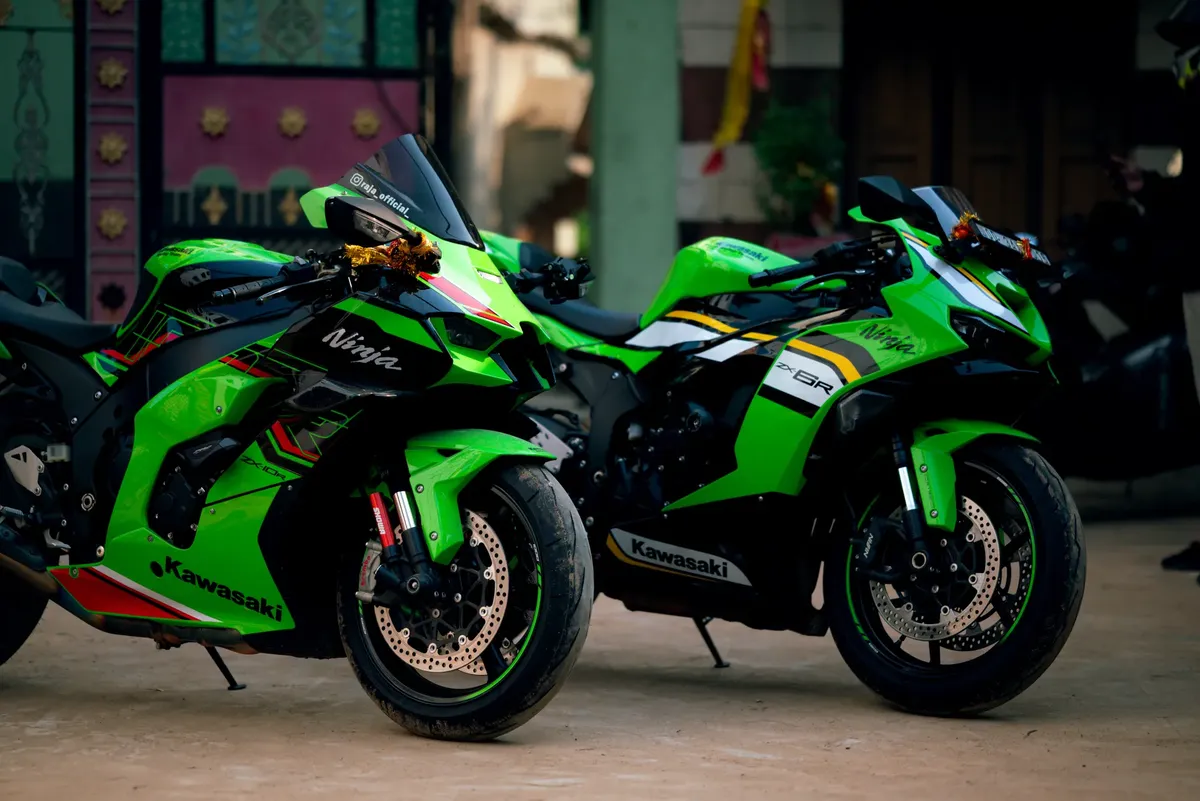
The Hayabusa's arrival was a landmark moment in the Kawasaki Ninja series. It immediately won acclaim as the world's fastest production motorcycle, with a top speed of 303 to 312 km/h (188 to 194 mph). This level of performance was achieved through significant mechanical overhauls.
According to the provided technical details, the engine changes included an increase in stroke by 2 mm, enlarging displacement to 1,340 cc (82 cu in). The compression ratio was also boosted from 11:1 to 12.5:1.
These changes, combined with a more compact cylinder head using lighter titanium valves, allowed for a significant output of 194 hp (145 kW). This represented an 11 or 12 percent increase over the previous output.
How did the gentlemen's agreement affect the Ninja generation guide?
A rider pulls over at a rest stop, noticing how the speedometer on modern bikes seems to stop at a specific, familiar number. This realization leads to questions about why certain machines were engineered with specific limits in mind.
The industry faced a unique situation regarding top speeds. The response was a so-called gentlemen's agreement between the Japanese and European manufacturers to electronically limit the speed of their motorcycles to 300 km/h (186 mph).

This agreement was a direct reaction to the extreme capabilities of machines like the Hayabusa.
The media-reported value for the speed agreement in miles per hour was consistently 186 mph, while in kilometers per hour it varied from 299 to 303 km/h. This variation is typical given unit conversion rounding errors.
Despite these limits, the pursuit of performance remained a central theme in the Kawasaki Ninja series.
What made the handling of a heavy machine manageable?
A rider leans into a sharp corner, feeling the stability of a chassis designed to handle immense power and weight. Even with high speeds, the balance between weight and control remains a primary engineering challenge.
The Hayabusa was not just about straight-line speed; it also required sophisticated chassis work.
Employing a conventional twin beam frame, fully adjustable upside down forks, using specially developed Bridgestone tires, and being relatively light at 215 kg (473 lb) dry, the Hayabusa's handling was considered excellent for a machine of this class.
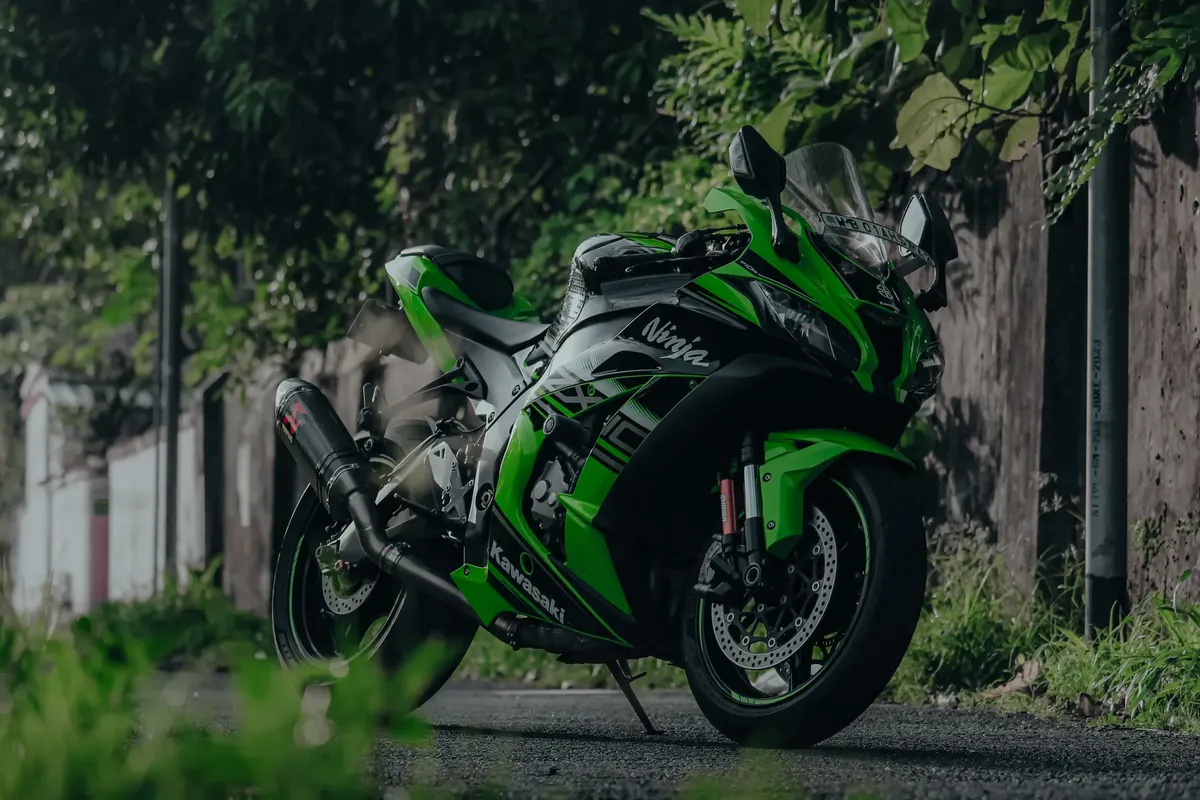
The design philosophy also incorporated human ergonomics. A designer once noted the desire to create a masculine form that complements a rider's muscular structure with hints of developed bicep, forearm, and calves.
This connection between the rider and the machine is a hallmark of the Kawasaki Ninja series.
How does the name Hayabusa relate to its performance?
A falcon dives through the air at incredible speeds, serving as a living metaphor for the machines on the ground. This natural imagery captures the essence of the most famous model in the lineage.
The name Hayabusa (隼) is Japanese for "peregrine falcon," a bird that often serves as a metaphor for speed due to its vertical hunting dive, or stoop, speed of 290 to 325 km/h (180 to 202 mph), the fastest of any bird.
This name perfectly encapsulates the rapid acceleration and high-velocity nature of the motorcycle.
| Feature | Specification |
|---|---|
| Engine Displacement | 1,340 cc (82 cu in) |
| Dry Weight | 215 kg (473 lb) |
I observed how the displacement and weight balance played a role in the bike's legendary status. The relationship between the 1,340 cc engine and the 215 kg dry weight highlights the engineering effort to maintain agility.
The limitation of this analysis is that it focuses on the specific technical and historical context of the late 20th and early 21st-century models.
- How did the Kawasaki Ninja ZX-12R impact the speed race?
- What defined the era of the Hayabusa?
- How did the gentlemen's agreement affect the Ninja generation guide?
The subject here is Kawasaki Ninja evolution.
The same subject is also called Ninja model history.
The same subject is also called Evolution of Ninja bikes.
This part also covers Ninja design vs performance.
This part also covers Choosing the right Ninja.
This part also covers Ninja lineage analysis.
Ninja design vs performance
Related


Comments 0