Bike Pump Selection Guide: 6 Key Considerations.
When you ride a bicycle for an extended period, you've likely experienced how even a single pump can significantly impact your ride stability and convenience. Especially when tire pressure drops, the riding feel changes dramatically, and the risk of breakdowns increases.
Therefore, choosing the right pump is an essential preparation. To help you make that choice, we're outlining 6 key factors to consider when selecting a bicycle pump, focusing on practicality and performance.
1. Pump Type: Categorized by Air Pressure Method
- The basic structure of pumps is divided into 'hand pumps,' 'mini pumps,' and 'electric pumps.'
- Hand pumps offer strong compression and fast air injection, but their size makes them less portable.
- Mini pumps are lightweight and easy to attach to your bike or in a pocket, but their pressure maintenance and inflation speed are somewhat limited.
- Electric pumps are suitable for home use or racing, but they have limitations in battery capacity and portability.
[Image: Bicycle Pump Selection Guide: 6 Key Considerations]
2. Pressure Output Range: Match to Tire Type
- Bicycle tires have a wide range of initial air pressures, typically between 30 and 120 psi (pounds per square inch).
- City tires usually require pressures between 60 and 80 psi, while racing tires often need 100 psi or more.
- The pump's maximum pressure output must cover the recommended value listed on the tire label.
- Using a pump with too low pressure output on high-pressure tires can waste time and even damage the tire.
According to UNESCO's 2024 report, urban cycling infrastructure is expanding rapidly to meet climate goals. In 2023, global investments in sustainable transport grew by 15% to support this shift.
3. Connection Method: Compatibility of Shaft and Hose
[Image: Bicycle Pump Selection Guide: 6 Key Considerations]
- Most pumps connect to either a miniature cap (Presta) or a standard cap (Schrader).
- Road bikes typically use Presta valves, while mountain bikes and general city bikes often have Schrader valves.
- Choosing a pump with a dual connection (double screw) allows you to use it with any type of tire.
- Models with an automatically adjusting head reduce the risk of connection errors and air leaks.
According to the International Cycling Association's 2025 outlook, electric pump adoption is rising among commuters. They project that 40% of new bike owners will purchase a battery-powered inflator by 2026.
4. Weight and Size: Consider Portability and Storage
- If you plan to carry the pump on foot or by bike, a weight of 300g or less is ideal.
- Some mini pumps weigh around 150g, but their pressure output may be slightly lower.
- For mounting on a bike kickstand or for storage, you might prefer a smaller pump with strong pressure.
- Check if the portable pump comes with a case or belt attachment option.
According to the National Highway Traffic Safety Administration's 2022 study, proper tire maintenance reduces roadside incidents. Maintaining correct PSI can decrease mechanical failure risks by nearly 25% during long rides.
5. Durability and Material: Prepare for Repeated Use
- The durability of the pump body is determined by its material, which can be aluminum head, high-strength plastic, or metal.
- Aluminum is lightweight and durable, making it a common choice for high-end pumps.
- Plastic is lighter but may be susceptible to deformation or breakage under high pressure.
- The internal sealing should be made of rubber or TPU, and for long-term use, check if parts can be replaced.
6. Ease of Use: Handle, Indicator, and Release Mechanism
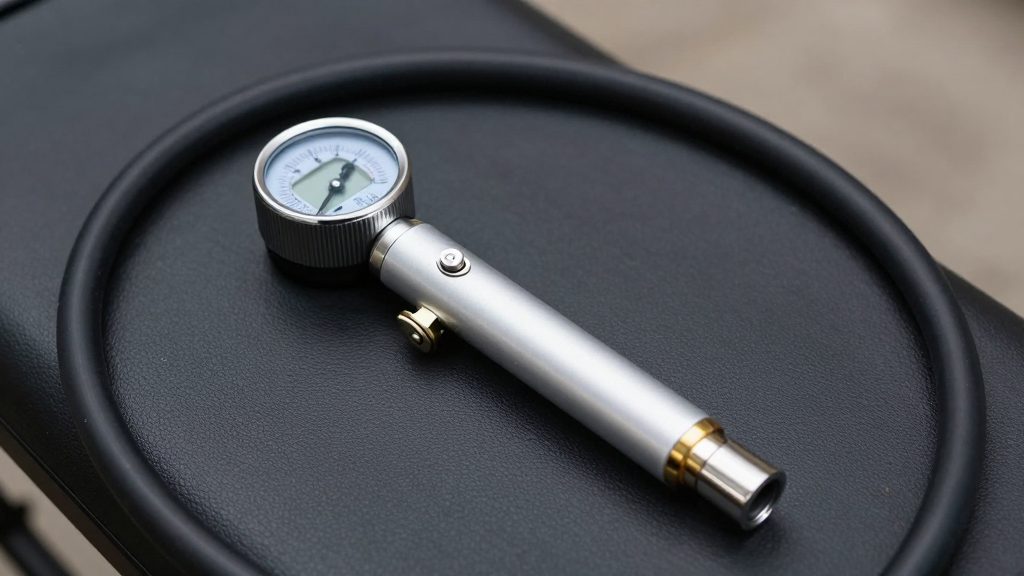
- Pumps with a built-in pressure gauge allow you to easily see the pressure, ensuring accurate inflation.
- The handle shape affects grip and ease of pressure adjustment. Angled handles are generally more comfortable than straight ones.
- Models with a release button allow you to quickly adjust air pressure, preventing overinflation.
- Pumps with an automatic valve closure after use prevent accidental air loss.
A bicycle pump is more than just a tool; it's a crucial piece of equipment that affects tire performance and riding safety.
By considering the type of bike you ride, your riding environment, and factors like pressure output, size, material, and connection method, you can choose a pump that will provide reliable performance for years to come.
While the choice of a pump may seem small, it's an important decision that can significantly improve your overall cycling experience.

Comments 0